16 Jul, 2026
Beyond the Game: What the World Cup May Reveal About North America Preparedness
By: Roy Shay, Vice President, Rafa Biodefense
As the 2026 FIFA World Cup unfolds across North America, millions of spectators are filling stadiums while billions of viewers around the globe tune in to watch the matches. It is the largest sporting event ever held on the North American continent, and it requires an unprecedented level of coordination among public safety officials, emergency managers, healthcare providers, and security personnel.
Much of the public discussion surrounding the tournament has focused on stadium construction, transportation systems, and crowd management. These are all important considerations. But the World Cup also offers an opportunity to examine a broader question: how prepared are we for the threats of tomorrow?
Technology is changing the threat environment in profound ways. The tools available to bad actors today are vastly different from those that existed even a decade ago. Take drones for example. Conflicts in Ukraine and Iran have proven the effectiveness of drones as a new form of warfare. Drones are inexpensive, widely available – and capable of inflicting severe damage. Meanwhile, the risk of chemical exposure, synthetic drug incidents, and other complex emergencies continues to evolve. Artificial intelligence is yet another layer of technological change, accelerating both defensive and offensive capabilities.
As threats become more sophisticated, our preparedness strategies must evolve as well. Fortunately, technology is also transforming our ability to respond.
Modern emergency management increasingly relies on real-time data, predictive analytics, interoperable communications systems, and advanced medical technologies. First responders today have access to capabilities that previous generations could only imagine. Yet one fundamental reality remains unchanged: when an emergency occurs, the outcome often depends on the actions taken during the first few minutes.
The best detection system in the world cannot save a life by itself. Neither can the most advanced command center. Preparedness ultimately comes down to whether the right tools are available to the right people at the right time.
The widespread adoption of naloxone provides a powerful example. Over the past decade, policymakers, healthcare providers, and community organizations have worked to make this life-saving treatment accessible to those most likely to encounter an overdose emergency. Today, first responders and patients can access naloxone as a nasal spray known as Narcan. The innovative delivery mechanism ensures Narcan can be administered quickly and easily (even by non-specialists). The result has been countless lives saved because treatment could be delivered immediately rather than waiting for more advanced medical intervention.
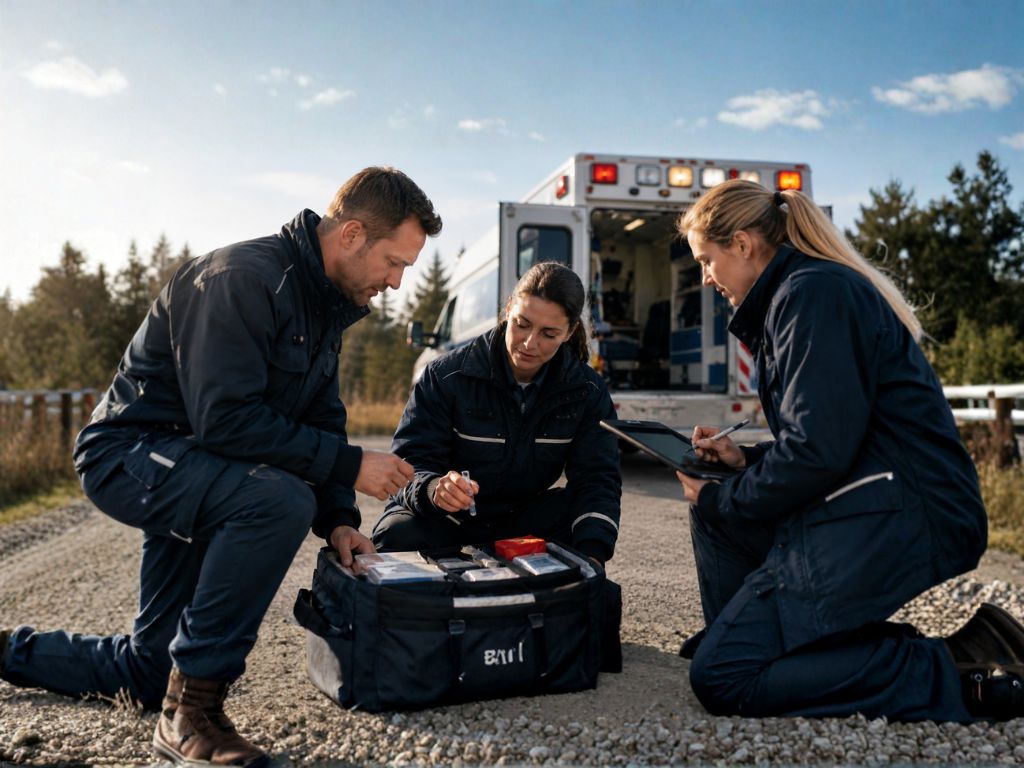
The same principle applies to many other emergency scenarios. Autoinjectors are another advancement in innovative drug delivery. New versions are portable and user-friendly, making them a valuable asset when responding to a chemical incident, a mass-casualty event, or another public safety emergency. But even the best technology must be positioned correctly to be effective.
Are first responders equipped with the tools necessary to act during the critical first moments of an incident? Are life-saving interventions available at the point of need, or stored far from the scene where they may ultimately be required? These questions are particularly relevant as communities prepare to host major international events.
Federal, state, and local agencies have invested significant resources to strengthen preparedness for the World Cup. Those efforts deserve recognition. The United States possesses some of the most capable emergency management and public safety organizations in the world. Yet preparedness is not a destination. It is a continuous process of adaptation.
The World Cup presents an opportunity to assess whether our planning assumptions keep pace with an evolving threat landscape. We should also think critically about how technological innovation can be translated into practical capabilities for the people who will be called upon to respond.
The threats facing society may continue to change. Technology will certainly continue to evolve. Our preparedness efforts must evolve alongside them.
As the world arrives on North America’s doorstep this summer, there is no better time to ask whether we are truly ready for what comes next.